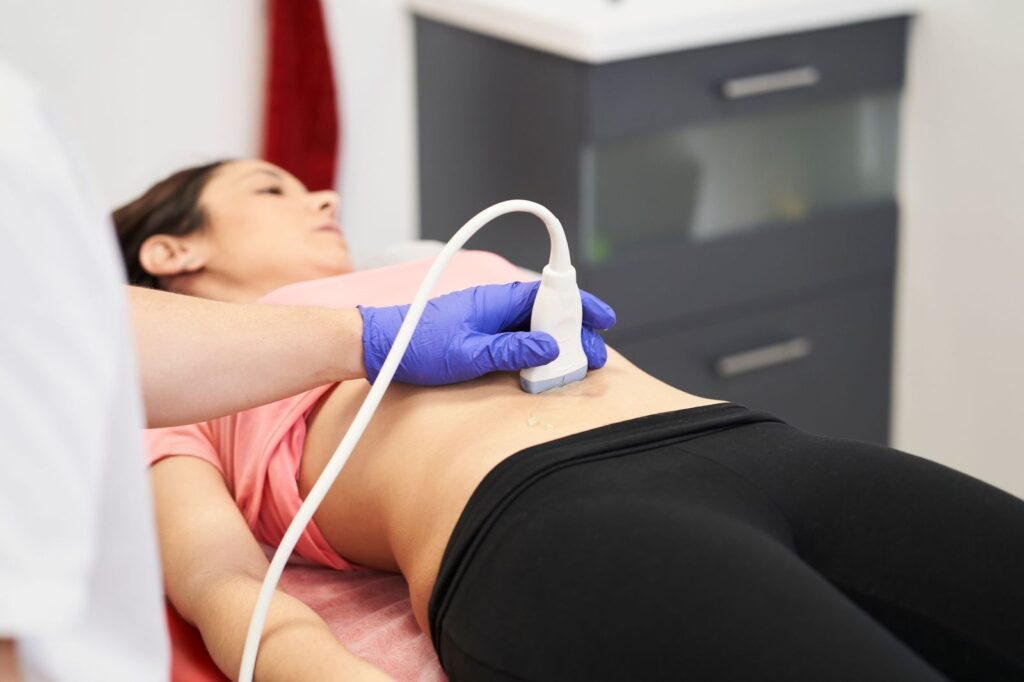
This is a detailed scan to map out visible deep endometriosis in the pelvis.
Endometriosis is a common gynaecological problem. It is present when endometriotic glands, similar to the endometrium (uterine lining), are found growing in other parts of the body. It most frequently affects the pelvis. Wherever the endometriosis grows, it responds to the instructions given by the ovarian hormones, oestrogen and progesterone, which are found in the bloodstream.
During menstrual periods the endometriosis sheds and bleeds, along with the uterine lining. However, without a natural drainage outlet (as the vagina is to the uterus) the tiny amounts of blood and shedding tissue gradually accumulate, frequently causing painful periods and, over time, scarring or blood collections known as endometriomas.
At this practice, we consider the possibility of endometriosis whenever we perform a pelvic ultrasound for someone with symptoms which may be due to the condition. However, your doctor may ask us to perform a detailed Deep Endometriosis scan if
A detailed scan for Deep Endometriosis (DE) may take a little longer than a typical pelvic ultrasound, depending on how severe your disease is. If pelvic pain is the main reason you have been sent for a detailed DE scan, you may like to consider taking some pain relief before you come. (Whatever you prefer to use for pain relief during your periods would be good.)
We also ask you to use some mild laxatives before the scan, to reduce the solid and gas content in the rectum and lower colon. This helps us get better views of the walls of the colon.
2 tablets of Dulcolax taken the evening before the scan is effective for most people. This will usually result in loose bowel motions in the morning (sometimes during the night). If there is little response by the morning, using a Microlax enema as well can help to bring about a bowel motion. Both of these can be bought at your local chemist for little cost.
If you suffer from constipation, you may need additional measures to respond to the Dulcolax and Microlax. Plenty of fluids with a low fibre intake the day before can help.
If you suffer from Irritable Bowel with frequent diarrhoea, or have a very regular bowel motion each morning, you may not need to use laxatives. We leave this choice to you.
Sometimes, even with use of laxatives, there is still gas or solids in the bowel which may limit the views. It is very uncommon for this to result in a recommendation for another scan.
The ideal time to schedule a Deep Endometriosis scan is in the 2 weeks before your period is expected (if you are not on any hormones). If you are using hormones, the timing does not particularly matter. If you have painful periods, try to avoid scheduling the scan during your bleeding days, just to reduce your own discomfort (the bleeding does not cause a problem for the scan otherwise).
You will be advised of the findings of your scan at the time. A detailed report will be sent to your referring doctor, who will provide you with further options and management advice.
Receive professional, compassionate care from our experienced team. Book an ultrasound appointment at a time that works best for you and take the next step in your pregnancy journey.

QDOS Ultrasound provides specialist obstetric and gynaecology ultrasound performed by highly experienced and motivated doctors and sonographers. The rooms are purpose-built, located on the ground floor at 12 Connolly Street, West Leederville, at the rear of Connolly House, which is on the corner of Connolly and Cambridge Streets, opposite SJOG Hospital Subiaco.
Pregnancy
Gynaecology
Contact
Address
12 Connolly St, West Leederville
PERTH – Western Australia 6007
Monday – Friday
8:00 am – 4:45 pm
(strictly by appointment only)
© 2025 QDOS Ultrasound. All rights reserved. | Designed and Created by MMS