
Your ultrasound will typically involve two types of scans:
If it’s your first visit or you’re returning after several years, we usually start with an abdominal scan. For this, please drink two glasses of liquid before your appointment. For returning patients, prior advice about bladder filling will apply.
For patients where a vaginal scan isn’t suitable—such as children, those who haven’t had sex, or those experiencing significant discomfort with intercourse—a full bladder is essential for the abdominal scan. This requires drinking three large glasses of liquid about an hour before your appointment.
 Ultrasound provides critical information about the ovaries and uterus lining (endometrium) during the menstrual cycle. When periods stop, the scan can help identify causes by assessing ovarian activity and endometrial changes.
Our specialists are skilled in diagnosing conditions like polycystic ovary syndrome (PCOS) and other complex cases requiring expert interpretation.
For the most accurate results, we often perform both types of scans:
 To ensure a clear ultrasound, we recommend:
If you’ve had ultrasounds at another practice in the past five years, please bring reports or images. These can provide valuable context for assessing changes over time.

Avoid scheduling during your period for comfort and accuracy. Note the first day of your last menstrual period to share with us at your appointment.
A gynaecological ultrasound typically includes: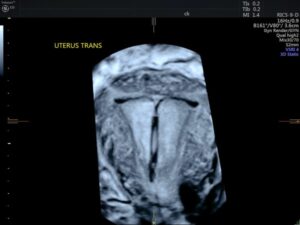
If your bladder isn’t full enough, extra time may be needed for proper preparation, especially for younger patients.