These are prenatal diagnostic tests. They are definitive “yes/ no” tests
(rather than screening tests, which only give likelihood).
They are most commonly offered to check the chromosomes of the baby for conditions such as Down Syndrome. They are also performed for other specific reasons, such as DNA testing for inherited genetic problems. We will need your blood group in writing (see After the Test below).
CVS (Chorionic Villus Sampling) is the early test. A small sample of the developing placenta (the fine placental fronds are called the chorionic villi) are taken for analysis.
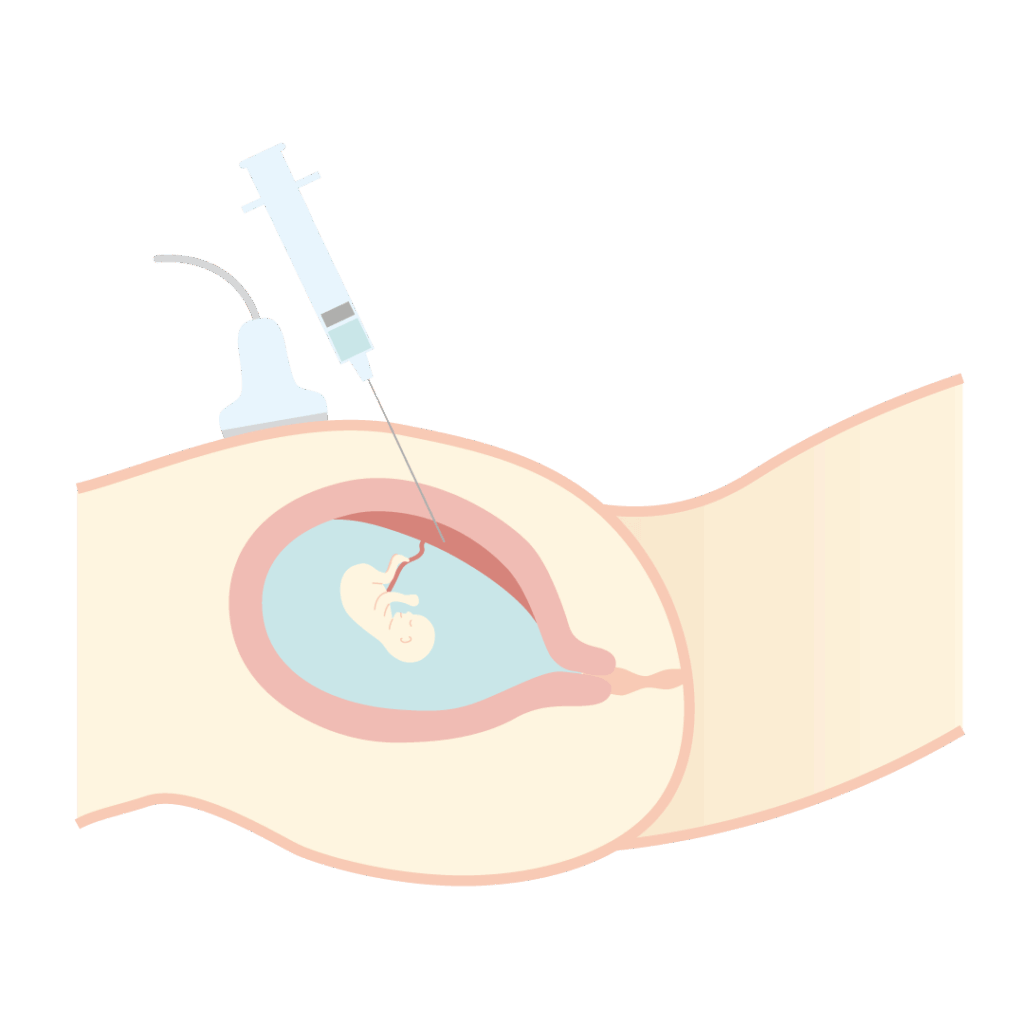
It is usually performed at 11-12 weeks of pregnancy for pre-arranged genetic testing or 12-14 weeks if following a high-probability first trimester screen or NIPT result.
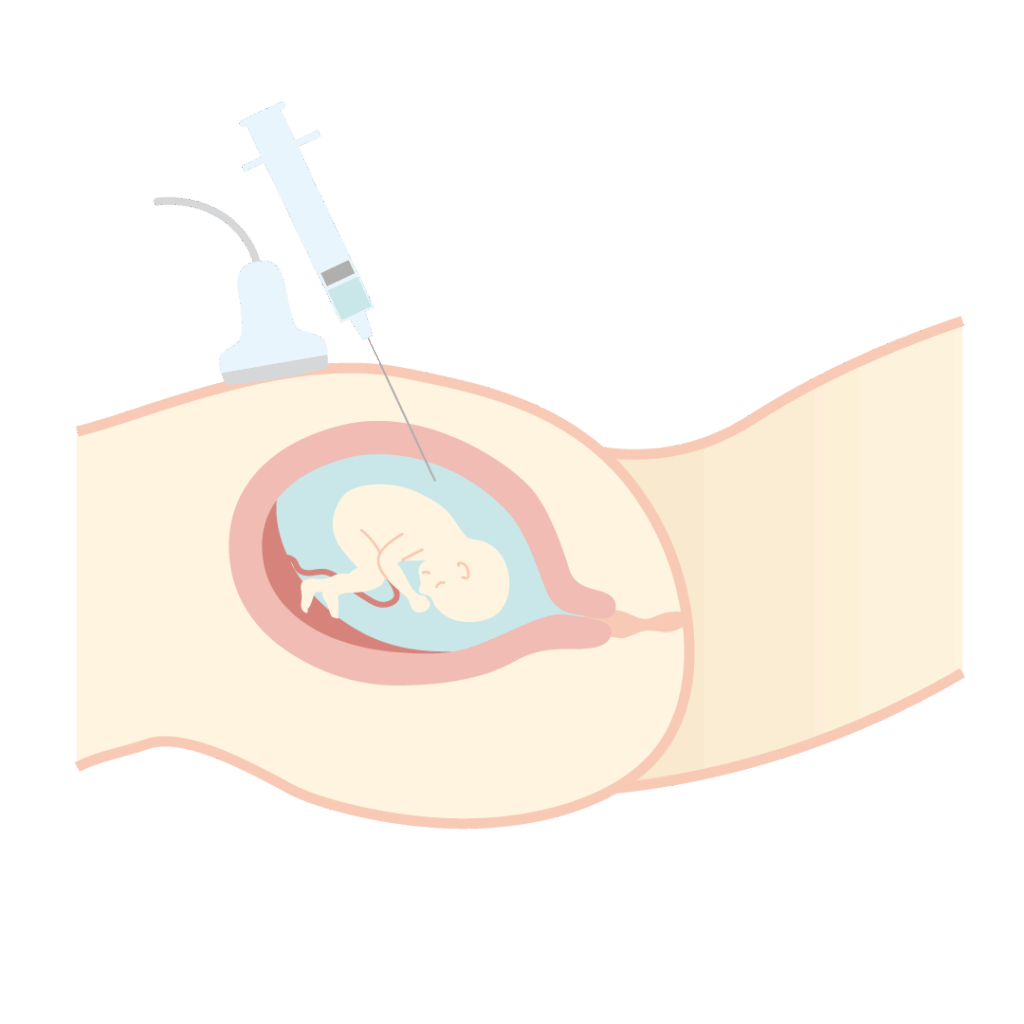
Amniocentesis is the ‘gold standard’ chromosome testing, but cannot be done until after 15 weeks. Some fluid is taken from the gestational sac for testing. Cells from the baby’s skin and sac membranes, which are floating in the amniotic fluid, are analysed. This test gives the closest information to the fetus and also carries the least risk of any diagnostic test.
Chance of a live-born baby with Down syndrome by age:
<35 years 1 in 380
37 years 1 in 240
38 years 1 in 190
40 years 1 in 100
45 years 1 in 30
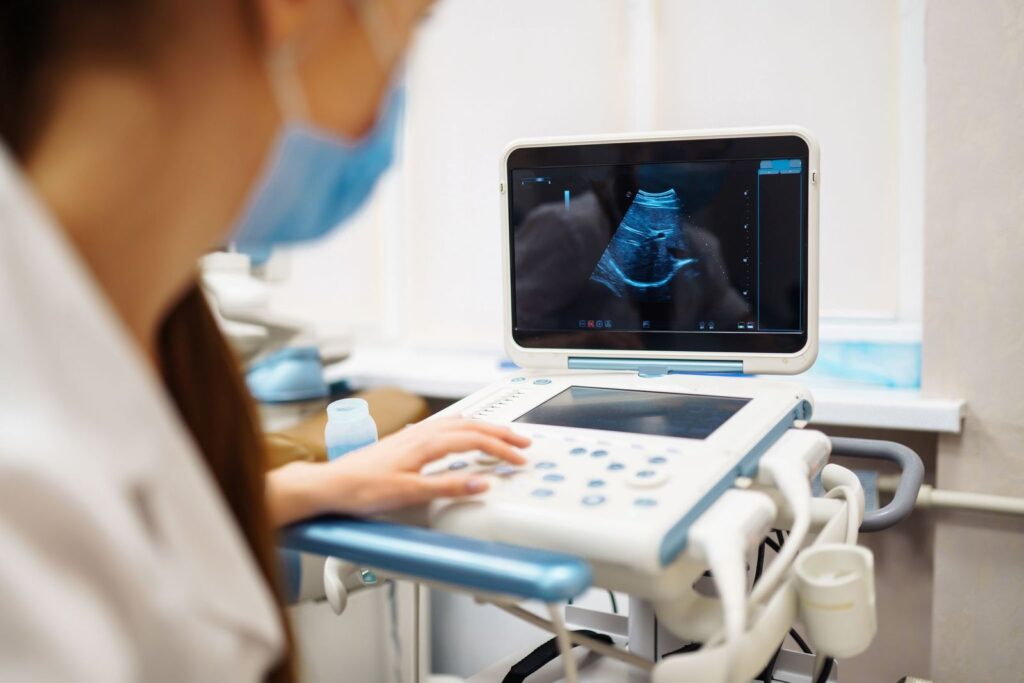
Before either test an ultrasound examination is performed to check the fetus, confirm the progress for the stage of pregnancy and locate the placenta.
CVS: The skin is washed with antiseptic, then some local anaesthetic is given. A needle is inserted through the skin into the uterus and placenta, under ultrasound guidance. The sample of the placenta is drawn up through the needle with gentle suction. Occasionally, a second needle pass is required if the sample is not sufficient for the particular tests required.
Amniocentesis: The skin is washed with antiseptic. No local anaesthetic is required. A fine needle is then passed under ultrasound vision through the skin, into the uterus and down into the fluid which surrounds the baby. A sample of the fluid is drawn up with a syringe, much like a blood test. On average, it is no more painful than a blood test, although the abdominal wall may feel sore afterwards.

We will ask you to sit quietly for several minutes after the test, and to take things quietly at home for at least a day. After having a needle through your abdominal wall, you can expect to feel sore for a day or two. If in doubt or if you are worried about any symptoms, contact your Doctor.
One in five people have a Rhesus negative blood group. If you are one of these, then you will require an “Anti-D” injection to prevent the complication of Rhesus Disease (where the mother makes antibodies against the fetus).
A rapid result for chromosome tests is usually available within 48 hours, with a charge from the laboratory. This preliminary test is for Down Syndrome and other common major chromosome abnormalities. The final results require culture of the specimen. This can take around 2 weeks and will be sent to your referring doctor. The chromosomes contain information of the sex of the baby, so you should consider whether you wish to know this.
The main risk is miscarriage. This is around 1% above the background rate for CVS and 0.5% (1 in 200) for Amniocentesis (when performed by an experienced ultrasound Doctor). Very occasionally after amniocentesis, the membranes may rupture early, without progressing to miscarriage. If this occurs, advice will be provided in the setting most appropriate to your personal circumstances.
As with any test, there are rare circumstances where a result is not available. This may be due to failure of cells to grow in the laboratory or where a particular CVS result is not considered trustworthy. This occurs in less than 1% of CVS, and then a confirmatory Amniocentesis is then advisable. Therefore, it is important that you make sure your Doctor knows how to contact you at all times after the test.
There are no other significant risks in tests performed after 10 weeks.
Amniocentesis is very close to 100% accurate for the chromosome result. However, even with both ultrasound and Amniocentesis, there is no guarantee that the baby will be born perfectly healthy.

You would be told what the abnormality was and how this could affect your baby, including referral for specialist Genetics counselling if required. You could use this information to consider whether or not you wanted to continue the pregnancy.
Depending on your circumstances, the results may come from our specialist staff at QDOS, or from your own personal Doctor.
There would be a full chance to discuss the situation according to the results and your wishes.
This is a very individual question and depends on your preference, level of risk, level of anxiety and the timing of any information leading to testing. The advantages of CVS are in the early timing and chance of a faster result. This allows:
1. Privacy before the pregnancy is apparent.
2. No delay between recognising a high-risk situation and diagnostic testing.
3. The reassurance of getting a normal result early.
4. A safer medical procedure to terminate the pregnancy if the result is abnormal.
These factors need to be balanced against the slightly higher risk of miscarriage compared to Amniocentesis (1% for CVS compared to 0.5 % for amniocentesis).
After a high probability NIPT test, amniocentesis is the ideal next test, to allow for detection of the rare event of a healthy fetus with an unhealthy placenta.
For more information on CVS and Amniocentesis, download the pdf documents below.
Receive professional, compassionate care from our experienced team. Book an ultrasound appointment at a time that works best for you and take the next step in your pregnancy journey.

QDOS Ultrasound provides specialist obstetric and gynaecology ultrasound performed by highly experienced and motivated doctors and sonographers. The rooms are purpose-built, located on the ground floor at 12 Connolly Street, West Leederville, at the rear of Connolly House, which is on the corner of Connolly and Cambridge Streets, opposite SJOG Hospital Subiaco.
Pregnancy
Gynaecology
Contact
Address
12 Connolly St, West Leederville
PERTH – Western Australia 6007
Monday – Friday
8:00 am – 4:45 pm
(strictly by appointment only)
© 2025 QDOS Ultrasound. All rights reserved. | Designed and Created by MMS